Board‑neutral, and the weeks are undated
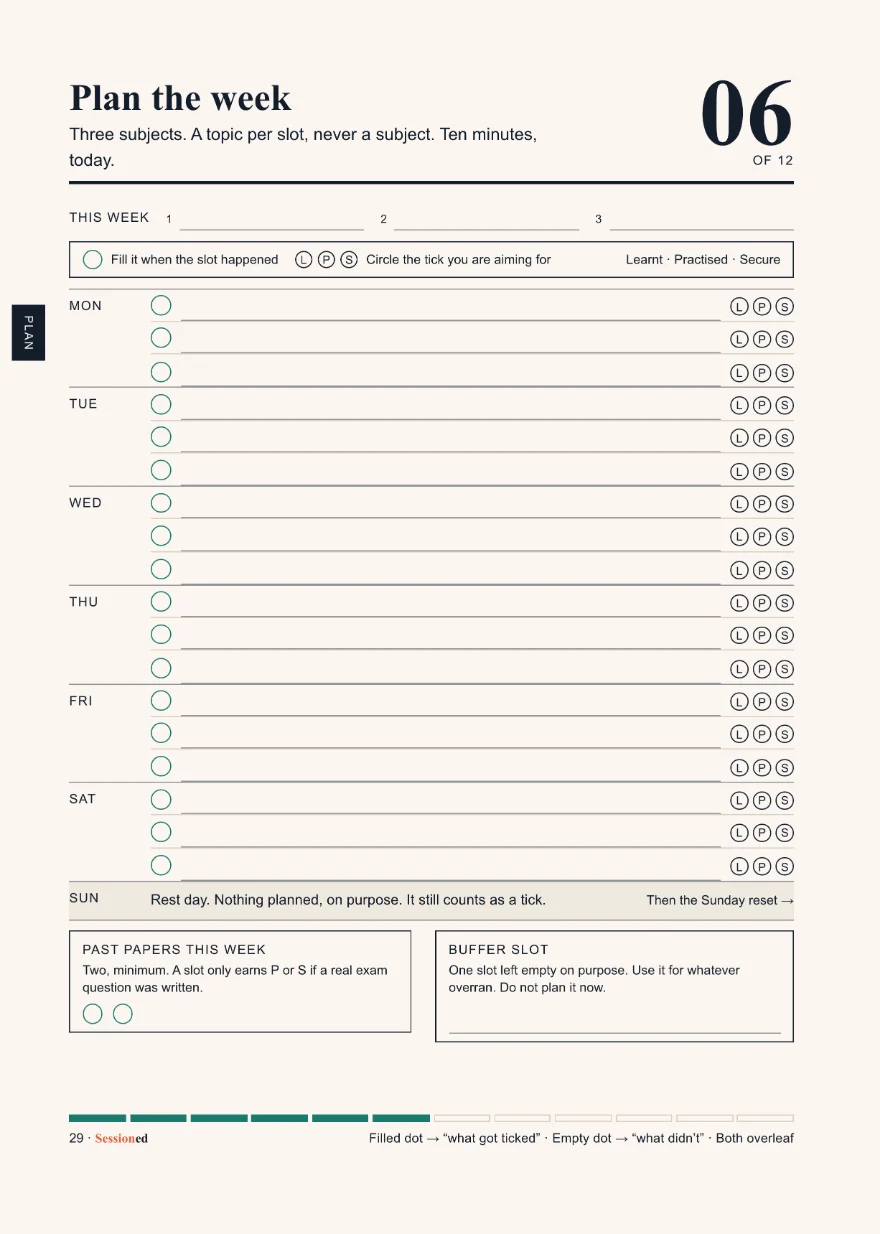
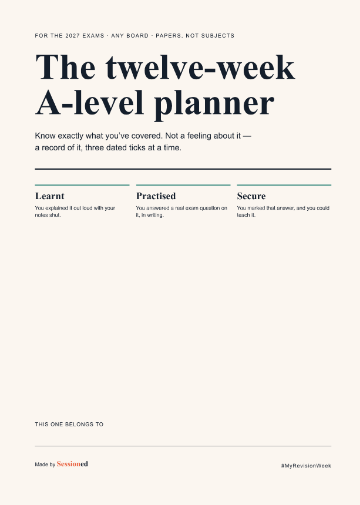
It carries no exam‑board logos, no topic lists and no formulae. You write your own papers on page five and your own topics on page eleven, which means the book fits whichever specification you are actually sitting — including a unitised one.
That is not caution for its own sake. Assessment objectives, non‑exam assessment rules and the contents of a formulae or data booklet all differ by board and change between specification versions. A printed list would be right for one board in one year and wrong for everybody else, and wrong in the expensive direction: you would revise to it.
The weeks are undated, so you can start any Monday. Start it in September, start it in February, start it six weeks out — week one is week one whenever you begin.
Finding your real exam dates
The timetable page in the planner is deliberately blank, and it asks for a row per paper rather than per subject. Copy your dates from your school’s statement of entry — that is the only document that says which papers you are entered for, in which series. Not a group chat, and not a national timetable, which lists papers you may not be sitting.
Two things worth checking while you have it open. Which system you are on: in England A‑levels are linear, so everything counts at the end and nothing sat in Year 12 carries a mark forward; WJEC A‑levels in Wales are unitised, so AS units do count and some are sat earlier. That decides whether a Year 12 exam is practice or is part of your result. And the contingency day: boards publish one at the end of the series and you are expected to be available for it, which is the date that ruins a holiday booked from the timetable alone.
If you want to cross‑check a date, use the board’s own published timetable:
These are the boards’ own pages, not ours, and they change them. If one of these is dead, the statement of entry still is not — ask the exams officer at school.
If you are the parent buying this
The book collects nothing. No app, no account for the student, no login, no code to register, no data from your child. Sessioned does not email under‑16s and runs no messaging community for students.
The receipt and the download link come to you, because you are the one who paid. The planner itself is for the student and needs nothing from us to work.
The most useful thing you can do with it is ask, once a week, what is on the Sunday reset page. Not what grade they expect, and not what university they are aiming at — both of those are questions this book deliberately refuses to answer.
Pay by card through Stripe. You do not need a Sessioned account to buy — we make one against the email you pay with, so you can re‑download the files later. Your files live at your downloads and the links re‑issue themselves every time you open it.
Try it first, for nothing
Four pages of the real book, as a PDF, with no email address asked for: what the method is, where the marks actually are, and a worked week — the plan page and the Sunday reset that reads it — filled in as an example.
See four pages first
The sample is for reading, not writing: form fields are in the A4, the A5 and the dark edition only, and never in a sample or a print master. A longer two‑week free edition exists and is not being given away yet. It goes here when it is.
Sitting GCSEs rather than A‑levels? The GCSE planner is the same method at that level, and it is on sale now.
Corrections
This is the first edition, version 1.0. No corrections have been issued yet — when there are any, they will be listed here with the version each was fixed in, and nothing will be quietly removed from the list.
Found something wrong — a broken link, a wrong page reference, a page that does not print right? Email hello@sessioned.co.uk and say which page. If it is a real error the file is corrected and replaced in place, so the next time you open your downloads you get the fixed version at no cost. You do not need to buy anything again.